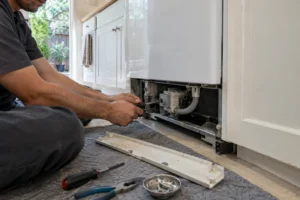
Kenmore Dishwasher AE Error Code
AE (E1 on some units) reports a water leak: water in the cabinet base trips the flood switch, or a low tub level speeds the pump.

Specialized Kenmore Appliance Repair in San Francisco
Mon–Sat: 8:00 AM – 7:00 PM
Water in, water out: most dishwasher trouble sits on one side or the other. We find out which before touching any part.
Kenmore repair checklist · San Francisco Bay Area

Model 587.1625 is a Kenmore dishwasher, with no size, finish or years given. Beyond type and brand we treat its details as unknown until we have seen the label.
A dishwasher that hums but stays dry is waiting for water. The supply valve, the inlet screen and the inlet valve itself are the usual suspects, as is a float that thinks the tub is already full. A display that reads IE on some Kenmore dishwashers points to not filling.
Standing water after the cycle is the other classic. The path runs from the sump through the pump and hose to the sink drain or disposer. The pump can jam on a broken glass chip or a fruit stone, and the hose can pinch behind the cabinet. Some units display OE for not draining, and C3 appears on others.
If the dishes come out warm but wet, or the water never seems to warm up, we check the heating circuit and the thermal sensing. Rinse aid and loading style matter too, so we ask about both.
Disposer connections, air gaps and drain loops determine how freely water leaves. Renters in older buildings often find a hose run that was improvised years ago. Fixing that routing is sometimes the entire repair.
Remove the lower rack, scoop out visible standing water, clean the filter and look for obstructions you can lift out by hand. Run the disposer. Reopen the supply valve fully. If the display shows anything, note it.
Compare notes with the guide to an unresponsive dishwasher, visit Kenmore dishwasher repair, or browse Kenmore dishwashers.
The inlet valve, pump and float for one dishwasher may not suit another from the same family, so parts are matched to the exact number. Give us 587.1625 in full, plus the serial line if you can read it.
On the day, we ask about the cycle, observe the fill and drain ourselves, and explain what we find. A written estimate follows, and any repair waits for your approval.
Blocked filter, jammed pump, kinked hose or a disposer plug are the usual reasons. We test the drain path step by step.
We do not state its status because it is not confirmed. The label tells us more.
It is unpleasant rather than dangerous, but clean the filter and run the disposer first.
You get a diagnosis and a written estimate before any repair is carried out.
Model-information disclaimer. Confirm your exact model number and specifications with your appliance documentation before booking a repair. Model pages are for identification and compatibility reference.
Standing water, dirty dishes, leaks and no-start problems on Kenmore dishwashers, checked from the drain path and the door latch through to…
Share a few details and we’ll confirm an appointment. Prefer to talk? Call us and we’ll help right away.