

Specialized Kenmore Appliance Repair in San Francisco
Mon–Sat: 8:00 AM – 7:00 PM
A puddle at the door, under the unit or in the cabinet below the sink: find the likely source of a Kenmore dishwasher leak and what to shut off first.
Kenmore repair checklist · San Francisco Bay Area
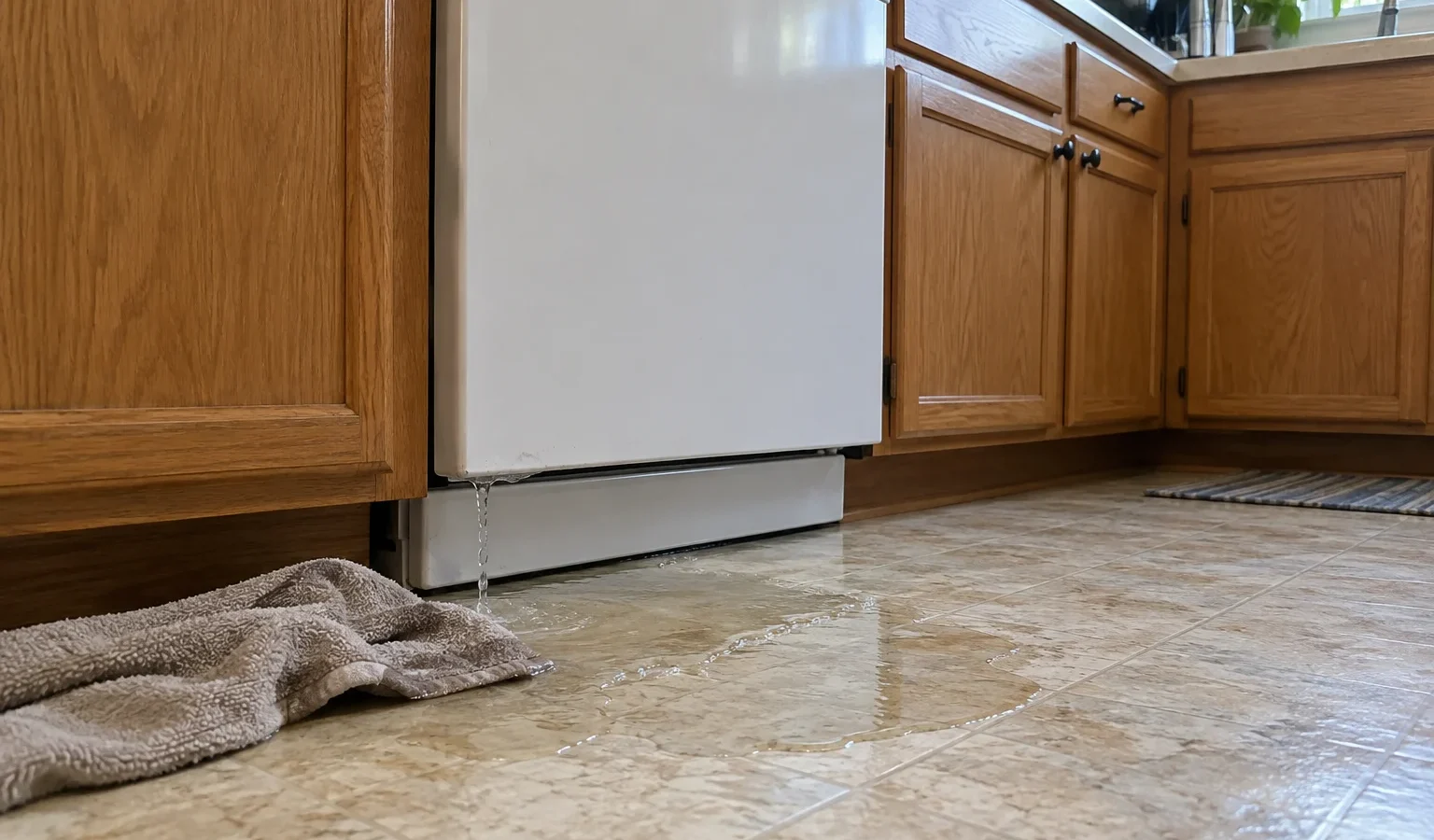
Dishwasher leaks are easy to notice and sometimes hard to place. The water you see on the floor may have run along the underside of the unit from a point several inches away. In a San Francisco flat with a shared floor or a unit below, it matters to act quickly and to document what you see.
Cancel the cycle and let the water drain if the machine will. Close the water supply valve under the sink. Switch off the dishwasher’s breaker if water is near the lower panel or an outlet. Mop and put towels around the machine so you can see where new water appears, and take a photo for the property manager if you rent.
Water dripping at the bottom or sides of the door suggests a door gasket that is dirty, worn or out of place, overloaded racks that touch the seal, or a latch that is not fully closing. A tilted unit that sits poorly in the cabinet can also let water slip past. The panel may show a door code such as the door switch failure.
The likely sources here are the inlet valve, the pump seal or a loose connection under the tub. The dishwasher may carry a leak sensor that reports it with codes such as AE, E1 or F8E4, which all describe water detected where it should not be. These need a technician.
A wet cabinet below the sink points to the supply line, the drain hose connection or the disposer. Run a dry paper towel along the supply line and the fitting at the valve; a drip at the connection is usually a loose or worn fitting. A hose clamp that has loosened at the disposer or drain tee also leaks only while the machine drains.
Too much water or suds can overflow. Dish soap in the machine is the classic cause. Overflow codes such as the overflow code describe a float switch that reads too high, and the float switch open code belongs to the same area. Drain problems that cause water to back up are covered in our article on a dishwasher that will not drain.
Steam and condensation near the top of the door are normal at the end of a hot cycle, but dripping of actual water down the front is not. A cracked dispenser or a faulty vent can be the cause.
Many dishwashers in older San Francisco buildings sit in a cabinet run that has been repainted, shimmed or modified over the years. Check that the front feet are adjusted so the unit sits square, because a slight forward tilt sends water out the door instead of down the drain. A cabinet floor that shows old stains may mean this is not the first leak, which is worth telling the technician and the landlord.
A small drip under the sink looks harmless but soaks the cabinet base, swells particleboard and breeds mold. Dry the cabinet, put a shallow tray under the fitting and keep watching it until the machine is checked. A flat tray also shows quickly whether the drip grows.
Do not keep running cycles to see what happens. Do not tighten a fitting under the machine with the power on or reach behind the lower panel. Do not pour suds-heavy products into the tub. If you smell burning or the control panel behaves oddly after getting wet, power off at the breaker and leave it off.
Photograph the wet area, note the date and write down which cycle was running. If the leak comes and goes, a short phone video of the floor during the fill, wash and drain stages tells a technician more than a long description. Keep any code you saw on the panel with it.
Gaskets, valves and pumps differ between Kenmore dishwashers, and the label inside the door edge or on the tub frame tells us which parts apply. A photo of the label and a short video of where the water appears usually speeds up the visit.
Book whenever the cause is not an obvious overload or loose hose clamp, whenever a leak sensor code appears, or whenever water returns after you have fixed what you could see. Our Kenmore dishwasher repair visit starts with diagnosis, then a written estimate; nothing is repaired until you approve it. Learn about the range on the Kenmore dishwashers page or see an example such as the 630.13003, a model that is no longer sold new.
A dirty or worn gasket, an overloaded rack, a latch that does not close fully or a machine that is not level can let water past the door.
Cancel the cycle, close the supply valve under the sink, switch off the breaker if water is near electrics, and dry the area.
Yes. Suds can push out of the tub. Use dishwasher detergent only and measure it.
A supply leak drips whenever the valve is open. A drain leak shows only while the machine drains. Watch under the sink at each stage.
It means a sensor found water where it should not be. Stop using the machine and have it checked.
Share a few details and we’ll confirm an appointment. Prefer to talk? Call us and we’ll help right away.