

Specialized Kenmore Appliance Repair in San Francisco
Mon–Sat: 8:00 AM – 7:00 PM
Gritty glasses, cloudy plates or food left on the bottom rack? Learn why a Kenmore dishwasher stops cleaning properly and which fixes are yours to make.
Kenmore repair checklist · San Francisco Bay Area
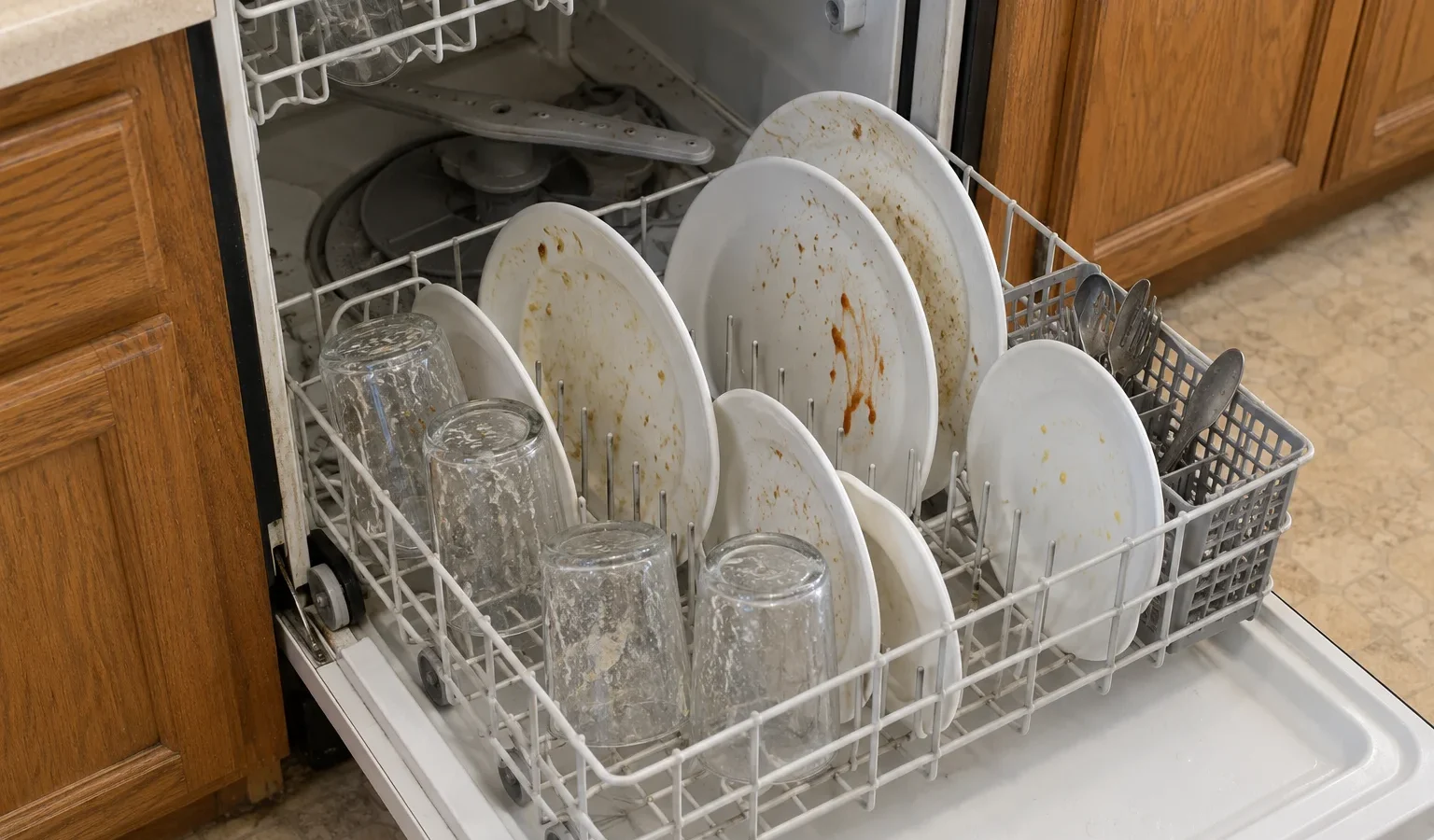
When a dishwasher starts to leave grit, film or dried food on dishes, the cause is rarely a single dramatic failure. A cycle only cleans if enough hot water reaches the dishes, if it is sprayed with force, if the detergent releases at the right moment and if the water that carries the soil away is drained out. Any step that weakens leaves its own signature on the plates.
Tall pans against the spray arm, bowls nested together, platters blocking the dispenser and cups tilted to catch water all reduce results. In small San Francisco kitchens the dishwasher is often loaded to the limit, and a rack that is too full is a very common cause.
Food collects at the bottom and recirculates over the dishes if the filter is full. Remove it, rinse it under running water and look into the sump for debris. A filter that has not been cleaned in a long time can make a good machine look broken.
Hard water leaves mineral crust in the small holes. Take the arms off if they snap off without tools and rinse them, using a toothpick to clear holes. Check that they spin freely by hand. An arm that is cracked or stuck needs replacing.
The dishwasher needs a full fill from an open supply valve and a kinked-free line. A tub that starts short of water cannot clean, and a code such as not filling may appear. Water that is too cold leaves grease behind; the machine often reports it, as with the water temperature too low code. In older buildings it can help to run the kitchen tap hot before starting a cycle.
If the cover is jammed by a tall dish, the detergent never reaches the wash. Panels can report a blocked dispenser cover, a cover that has not been closed or a detergent dispenser failure.
A failed heater or temperature sensor leaves the water lukewarm, and a weak circulation pump moves too little water. Codes like the heating failure code and the thermistor failure code point there. Those are repairs for a technician.
A machine that cannot drain returns dirty water to the dishes. The checks are in our article on a Kenmore dishwasher not draining.
Water hardness differs across the region. If your glasses show a white film that wipes away with a little vinegar on a cloth, minerals are the likely cause, not a failing machine. A rinse aid, a water softening additive recommended by the manual, or a slightly smaller amount of detergent can make a visible difference. If the film returns right after a thorough cleaning, test it again after resetting your loading habits before you decide something is broken.
A quick or light cycle is designed for lightly soiled loads. Dried egg, baked-on cheese and starchy residue need a longer and hotter cycle. Choosing the correct cycle is free and changes results more often than people expect. If the heavy cycle still fails, the issue is mechanical.
Do not mix cleaning chemicals or use dish soap in the dishwasher, because the suds can overflow. Do not open the lower panel to look at the pump or heater, and do not bypass the door switch. Burning smell: power off at the breaker.
Wipe the door gasket, clear the filter every few weeks, check the spray arms when you notice spots and leave the door ajar after a cycle so the tub dries. These small habits catch most slow declines in cleaning before they become service calls.
Book when the cleaning does not improve after the checks above, when the dishes come out warm but dirty, when a code persists, or when you hear a motor that runs but does not circulate. Our Kenmore dishwasher repair visit begins with diagnosis, then a written estimate; nothing is repaired until you approve it. Tell us the model number from the door edge or tub frame and describe what the dishes look like. You can read about the range in Kenmore dishwashers or glance at a sample, the 587.1525.
Hard water, too much detergent or empty rinse aid are the usual reasons. Reduce detergent, check the rinse aid and clean the filter.
Yes. A full filter lets soil recirculate over the dishes. Rinse it regularly.
A tall item may block the cover, or the dispenser may have failed. Reload and test again; if it persists, book a diagnosis.
Scrape off large pieces, but heavy pre-rinsing can leave detergent with nothing to work on. Follow your manual.
Yes. Run the tap hot first and look for a heating or temperature code if the problem continues.
Share a few details and we’ll confirm an appointment. Prefer to talk? Call us and we’ll help right away.