

Specialized Kenmore Appliance Repair in San Francisco
Mon–Sat: 8:00 AM – 7:00 PM
The model label is hiding somewhere on every Kenmore appliance. This guide shows where to look, what to write down, and why the full number helps a repair visit.
Kenmore repair checklist · San Francisco Bay Area
When you call about a repair, the first question is usually the model number. It is not a formality. The number tells a technician which parts fit your unit and which codes apply, and in a kitchen with several Kenmore units from different eras it keeps the wrong part from being ordered.
The data plate is a small sticker or metal tag that lists the model number, a serial number and electrical or gas details. The model number is usually the longest string labeled Model or Model No. Some are a mix of digits with a dash, some with a dot, and some begin with letters. Do not shorten it or drop characters; one missing digit points to a different appliance. Copy it exactly, and take a clear photo with your phone as a backup.
Open the fresh food door and check the inside wall, the door frame or the ceiling near the light. On some units the plate is low on the side wall, or behind a drawer or crisper. A chest freezer often has it on the inner wall near the top rim or on the back. For service details, see Kenmore refrigerator repair.
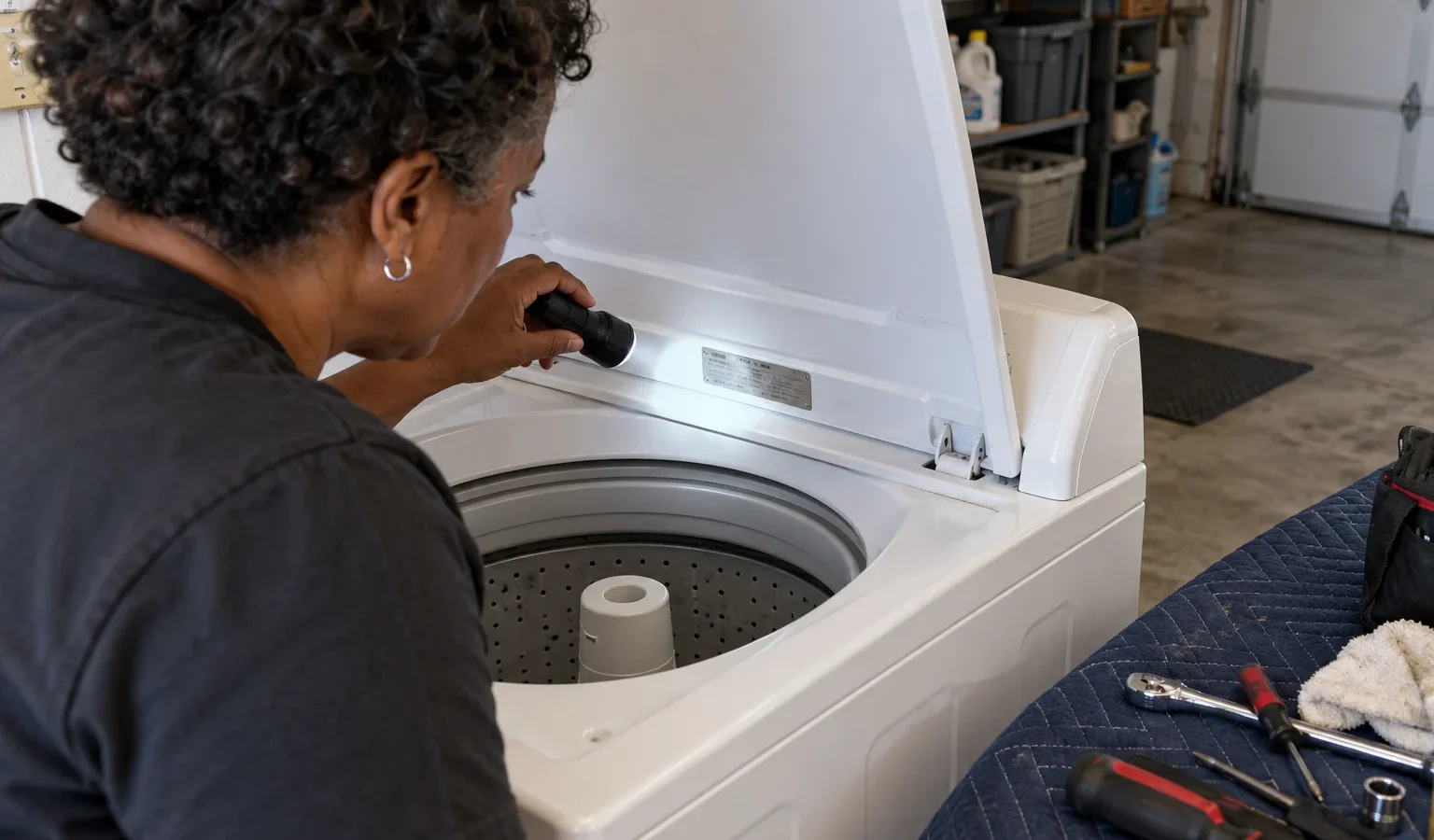
Top-load washers usually carry the label under the lid, on the rim of the tub area or on the back panel. Front-load washers tend to have it inside the door opening or on the door frame. In a stacked or closet install, shine a phone light along the edges before pulling anything out. See Kenmore washer repair.
Open the door and look around the opening, along the lower edge or the side of the frame. Some have it on the back panel or the top of the cabinet. In a closet install, the door opening is usually the easiest place to read it. See Kenmore dryer repair.
Open the door and check the side of the tub, the edge of the door liner and the top of the inner frame. Some are on the bottom edge. See Kenmore dishwasher repair.
On a range, the plate is usually on the oven frame when the door is open, inside the storage or broiler drawer, or on the back. Wall ovens often have it on the front frame or the side of the cavity. Cooktops carry it on the underside edge or the rim. See Kenmore range repair.
Microwaves usually show it inside the door frame or on the cabinet side, and range hoods behind the filters inside the housing. See Kenmore microwave repair.
Built-in and tightly fitted appliances hide the label. In a galley kitchen or an older flat the unit may be wedged between cabinets. Do not drag it out or tilt it; gas and water connections can be damaged. Check the original manual, a purchase email or the landlord’s records first. If the label has worn away, photograph whatever remains and let us know. A technician can often trace the model on site.
It is common in Bay Area rentals to find a Kenmore refrigerator, range and washer from different years, so write down the number for each unit, along with the room it sits in. A landlord or property manager with several flats should keep a list by address and unit.
Several numbers can appear on a label: model, serial, part numbers and electrical details. A shorter string near a barcode is often not the model number. If a tag shows more than one candidate, photograph the whole label and send the picture; we can pick out the right one. Also be careful with characters that look alike, such as the letter O and the digit zero, or the digit one and a capital I.
Labels can hide inside accessory areas too. A crisper bin, a storage drawer or a spray arm can cover a tag, and a cabinet door in front of a built-in unit can hide one more. Check slowly and use a phone light before moving anything.
For each Kenmore unit in your home, keep a note with five items: the appliance type, the room, the full model number, whether it is built in or free-standing, and any code you have seen. Add a photo of the label. Keeping that note in your phone, with the date, means the next breakdown takes a minute to report instead of a hunt behind the appliance. It also helps if you share a building with other tenants, because the same kind of unit may sit in several flats with slightly different labels.
If you manage rental property, a spreadsheet by address works better than memory, and it makes it easier to schedule maintenance at the right moment.
Browse the appliances section, see the models list, or check error codes once you know what your display says. Codes depend on the model family, which is one more reason the label matters.
It is usually inside a door frame, on a side wall, under a lid, behind a drawer or along an opening, depending on the appliance. Look for a tag marked Model.
No. They sit on the same tag but identify different things. The model number identifies the appliance type, and the serial number identifies your individual unit.
Photograph whatever you can read and share it when you book. A technician can often identify the unit during the visit.
You can book without it, but having it speeds up the diagnosis and the right parts. Please add it to the request.
Kenmore units came in several generations, and the same code can mean something different on each. The label tells us which meaning applies.
Share a few details and we’ll confirm an appointment. Prefer to talk? Call us and we’ll help right away.