

Specialized Kenmore Appliance Repair in San Francisco
Mon–Sat: 8:00 AM – 7:00 PM
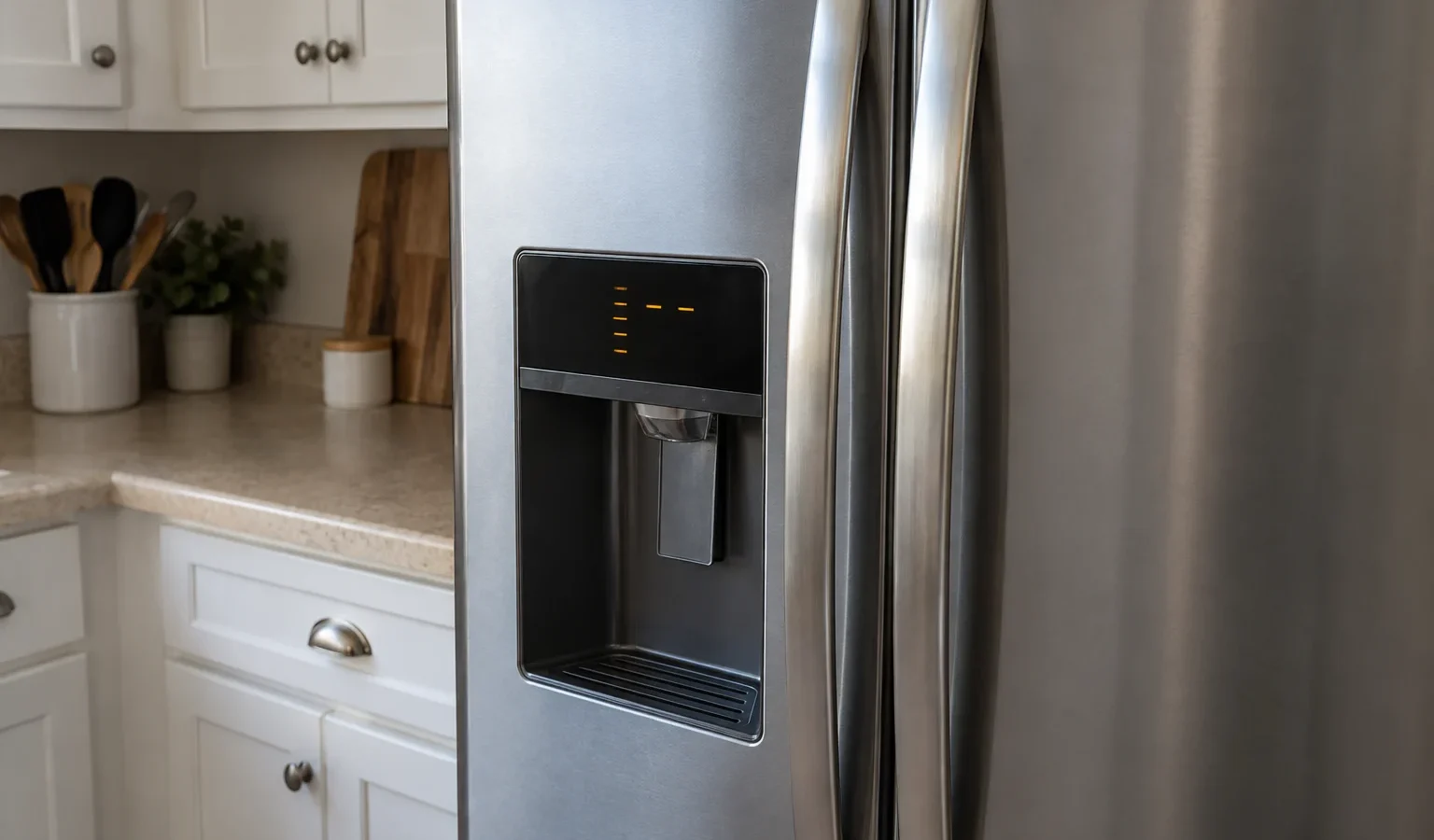
Letters, numbers or blinking lights on a Kenmore refrigerator display? Learn how to read the code, what several of them mean and what to do next.
Kenmore repair checklist · San Francisco Bay Area
Many Kenmore refrigerators can report a fault, but the way they do it varies: a letter on the temperature display, a pair of letters and numbers, a row of flickering lights, or a message on a touch panel. The code tells you which circuit the control is unhappy about, not necessarily which part has failed. A sensor code can come from the sensor, its wire or the control board, and that is why a diagnosis comes before a repair.
These codes describe a thermistor that reads open, shorted or out of range. They include the general compartment sensor failure, the open freezer sensor message and the shorted freezer sensor message. A bad reading can make the control run too much or too little, so food may be warm or frozen at the edges.
The evaporator fan failure, the evaporator fan circuit failure and the condenser fan motor fault all involve air movement. Fan problems lead to warmth in the fresh-food compartment or to constant running.
Codes for the defrost heater, such as the freezer defrost heater failure and the refrigerator defrost heater failure, signal that frost may be building where it should melt. Forced defrost mode means the control started a defrost cycle on command.
Door switch codes report a freezer or refrigerator door switch that is defective, and the air damper code reports a stuck damper. These are easy to confuse with a door that is simply ajar, so check that first.
When the display board and the main board stop talking, the unit reports a communication failure, for instance this communication failure. A reset sometimes restores the link; if it does not, the boards or wiring need testing.
Ice maker and dispenser codes, such as the dispenser failure, belong to the water side of the appliance. See our ice maker troubleshooting article for the checks that go with them.
One code, the sealed refrigerant system failure, refers to the cooling circuit itself. It is never a do-it-yourself matter.
Some codes are used on several designs, and the same letter can mean different things on different displays. That is why each code page on this site lists what it applies to. If a code you have does not match the list, do not assume a meaning; give us the model number and a photo.
Some Kenmore refrigerators have no text display at all. Instead a light flickers a set number of times, then pauses and repeats. Count the flickers carefully and note which light is blinking. For instance, one flicker reports a refrigerator temperature sensor failure, three flickers a defrost temperature sensor failure, and six flickers a defrost heater failure. Counting twice, ideally on video, prevents a mistaken diagnosis.
A number of sensor codes carry a low or high reading in their name, such as the refrigerator compartment sensor code and the freezer sensor code. The wording tells a technician which direction the reading went wrong, and that narrows down whether the problem is a short, an open wire or a drifting sensor. It does not change what you should do: record it and arrange a visit if it returns.
Tell us the full code, whether it showed on the refrigerator or freezer side, what the food felt like, and whether any water or noise came with it. The more precise the description, the faster the diagnosis goes.
You can read and record the code, check the doors and gaskets, clear a vent that is blocked by food packages, confirm the power and breaker, and try one reset. You should not open rear panels, test live circuits, bypass a door switch or touch the refrigerant lines. A burning smell means power off at the breaker.
The code tells us where to begin. We test the sensor with a meter, check the connector and wiring, test fans and heaters, and look at the control board last. That sequence avoids replacing a good board for a corroded plug. You receive a written estimate after diagnosis, and nothing is repaired without your approval. Start at Kenmore refrigerator repair to request a visit.
If you rent, a short note with the date, the code and a photo is useful for the landlord or property manager too. Repeating codes tell a story: one that appears only after a power cut is different from one that returns every evening.
Browse the whole set on the Kenmore error codes index, learn about the range in Kenmore refrigerators, or see how a model page looks with the compact 46-99079. If the symptom is warmth, continue to Kenmore refrigerator not cooling.
Write it down, photograph the display, check that the doors are closed, then try one controlled power reset to see whether it returns.
No. A sensor code can come from the sensor, a wire or the board. A diagnosis separates them.
A reset may clear a temporary glitch. If the code returns, the fault is real and needs a technician.
Do not guess a meaning. Send us the model number and a clear photo of the display and we will check it during diagnosis.
It means the boards cannot talk to each other. Sometimes a reset restores it, but a repeat points to a board or wiring problem.
Share a few details and we’ll confirm an appointment. Prefer to talk? Call us and we’ll help right away.