

Specialized Kenmore Appliance Repair in San Francisco
Mon–Sat: 8:00 AM – 7:00 PM
Warm food, a quiet compressor or a freezer that is fine while the fresh-food side is not: what a warm Kenmore refrigerator usually means and what to check first.
Kenmore repair checklist · San Francisco Bay Area
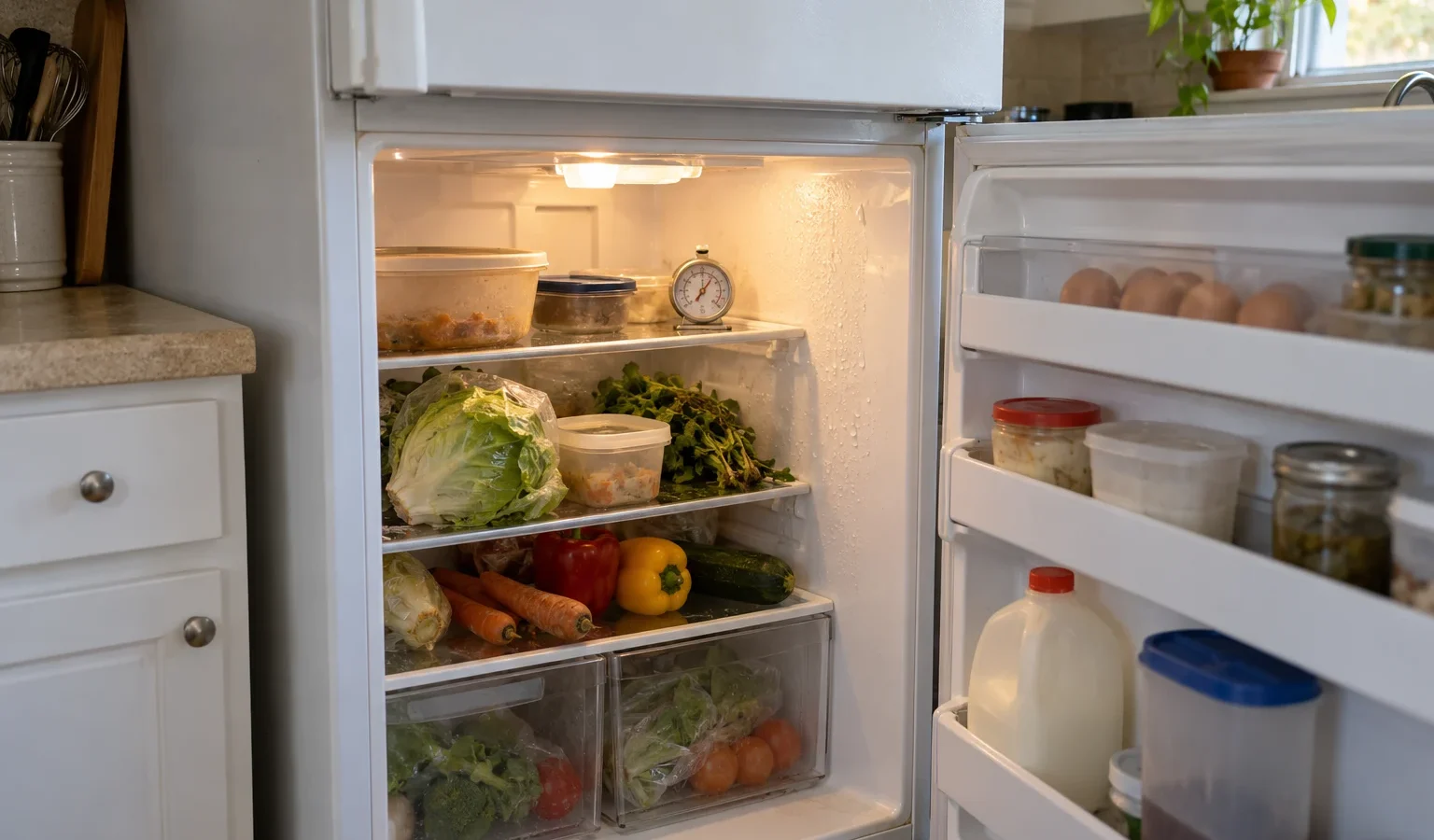
A Kenmore refrigerator that no longer keeps food cold is rarely a total loss. In most kitchens the unit still runs, the light still comes on and the freezer may even feel normal, yet the fresh-food side drifts warm and the milk turns before its date. The pattern of what is warm and what is cold tells you more than the thermostat setting does, so start by noticing exactly where the problem shows up.
Three patterns cover most calls we see across San Francisco flats, in-law units and family houses.
In most frost-free refrigerators the cold is made in the freezer and pushed into the fresh-food side by a fan. A defrost heater, a defrost sensor or the control that times the cycle can fail, and frost slowly wraps the coil until air can no longer pass. The freezer may stay cold for days while the refrigerator warms. A technician checks the defrost circuit part by part rather than replacing parts at random.
There are usually two: one moves air over the coil inside, the other cools the compressor and condenser at the back or bottom. If the evaporator fan stops, the fresh-food side warms quickly. If the condenser fan fails, the compressor runs hot and long and cooling falls off gradually. Some Kenmore displays report this directly; the meanings for an evaporator fan failure and a condenser fan motor fault are listed on their own pages.
A damper that stays shut starves the refrigerator section of cold air. A temperature sensor that reads wrong makes the control run the cooling cycle at the wrong time. Neither shows from the outside, but both are common on older units still working in rentals and family kitchens.
Dust and pet hair on the condenser coils act like a blanket. Kenmore refrigerators pushed into snug San Francisco alcoves often have almost no space to breathe, and that alone can make a healthy unit run warm in a closed galley kitchen.
Less often the refrigeration circuit itself has failed. That work is for a technician only and is the last thing we conclude, after the simpler explanations have been ruled out.
Do not chip at ice on the coil, do not run a hair dryer behind panels, and do not turn the thermostat to its coldest setting hoping for a fix. That setting rarely cures a mechanical fault and can freeze food on one side while the other stays warm. Never touch the refrigerant lines or open the compressor compartment.
Keep the doors closed as much as possible. A full freezer holds its cold longer than a half-empty one. Move the most perishable items, such as dairy and raw meat, into a cooler with ice if the fresh-food section keeps drifting warm, and throw out anything that has sat warm for a long stretch.
Book when the unit has no power despite a good outlet, when the compressor runs without end and still cannot get cold, when the freezer is frosted over, when water pools under the cabinet, or when a code keeps returning after one reset. Our Kenmore refrigerator repair visit starts with diagnosis, then a written estimate, and nothing is repaired until you approve it.
Defrost parts, fans and dampers differ from one Kenmore refrigerator to another, so the model number lets us bring the right part. The label is usually on the inside wall of the fresh-food compartment or along the door frame. A photo of it with your request speeds things up. You can read about the range on our Kenmore refrigerators page, and a French-door example such as the 46-75525 shows what a model page looks like.
Usually cold air is not reaching the fresh-food side. A blocked vent, a stuck damper, a failed evaporator fan or a frosted coil from a defrost fault can each cause it. A technician checks them in order.
Not for long. Move perishables to a cooler, keep the doors shut and discard anything that has been warm for an extended time. When in doubt about meat, dairy or leftovers, throw them out.
A single controlled power reset can clear a minor control glitch, but it will not repair a failed fan, heater or sensor. If the problem comes back, book a diagnosis.
They can make it run warm and nonstop, especially in a tight alcove. Cleaning exposed dust helps, but if the warmth continues a component is likely failing.
Many warm-fridge faults come from a single replaceable part, and a diagnosis tells you which. We give a written estimate first so you can decide with the facts in hand.
Share a few details and we’ll confirm an appointment. Prefer to talk? Call us and we’ll help right away.