

Specialized Kenmore Appliance Repair in San Francisco
Mon–Sat: 8:00 AM – 7:00 PM
No ice, tiny cubes, a frozen clump or a stuck arm: how a Kenmore ice maker works, what usually stops it, and the checks you can make from the outside.
Kenmore repair checklist · San Francisco Bay Area
Ice makers fail in quiet ways. The bin simply stops filling, cubes shrink to chips, or everything freezes into one lump. Because an ice maker sits at the end of a chain that includes the water supply, the freezer temperature, a heater, a motor and a sensor, the question is not only whether the ice maker is broken but where the chain has been interrupted.
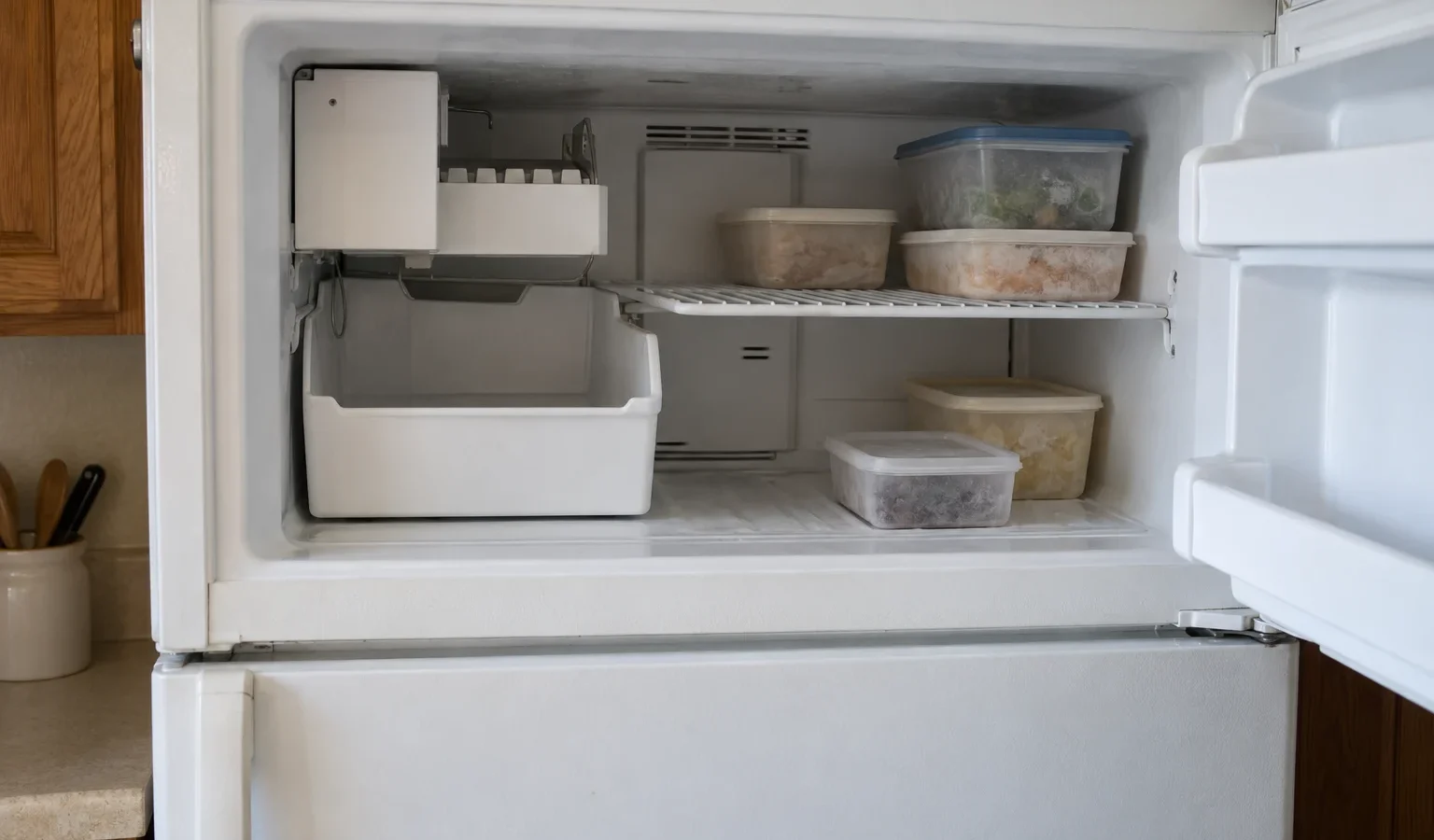
Water enters a small mold through an inlet valve at the back of the cabinet. The freezer’s cold air turns it to ice. A heater briefly loosens the cubes, a motor-driven arm or ejector pushes them into the bin, and a feeler arm or sensor decides whether the bin is full. If the freezer is too warm, the water line is restricted, the valve is stuck or the arm is held up, the cycle halts at that step.
Check the on/off setting first; the feeler arm may be resting in the up position, which tells the machine the bin is full. Then look at the supply: a closed or kinked valve behind the cabinet stops everything. If the freezer itself is not cold, the ice maker cannot freeze anything, and that is a cooling problem described in our article on a freezer that will not freeze.
This points to a weak water flow. A partly blocked line, a clogged filter or a valve that opens only partly leaves the mold underfilled. If the water filter has gone a long time without a change, the filter is a fair suspect.
The cubes melted a little and refroze together. That happens when ice sits unused for a long time, when the freezer door was left open, or when the temperature swings because of a defrost problem. Empty the bin, discard the ice and watch whether it repeats.
If ejection fails, the heater or the motor may have stopped. A technician tests each rather than guessing. Do not pry ice out with a sharp object, since it is easy to crack the mold or damage wiring.
Then the supply line is probably fine, which narrows the cause toward the ice maker’s own valve, mold or controls. If the opposite is true and ice forms but the dispenser is silent, a dispenser or flow issue is likelier; read about the dispenser failure code if your display shows it.
Some Kenmore displays name the part. The ice maker sensor error, the ice compartment fan failure and a system error inside the ice maker each have a page of their own: ice maker sensor error, ice compartment fan failure and system error inside the ice maker. The full list sits in the Kenmore refrigerator error codes article. Write down whatever you see before you reset.
Hard water leaves mineral deposits that can clog a tiny valve screen or slow a filter. Long-unused rental units, vacation homes and shared buildings sometimes come back from a period of disuse with a line that is dry or an ice maker that has stalled. Letting the line flush and discarding the first batches of ice is a reasonable habit.
Because the mold lives in the freezer or on the freezer door, anything that warms the freezer shows up first as weak ice. Soft ice cream, frost on the back wall or a freezer fan that has gone quiet are all hints. Fixing the ice maker alone will not help if the compartment cannot hold a steady cold, so we check the freezer’s temperature and airflow before testing the ice maker parts.
Do not stick a knife or screwdriver into the mold, do not run hot water into the freezer, and do not unplug the ice maker’s wiring. Leaks around the valve or supply line need the water turned off at the wall valve until a technician looks at them.
Use the ice regularly so cubes do not sit and fuse, keep the freezer shelves clear of the ice maker, and change the filter on schedule if your model has one.
Book when the checks above find nothing, when the ice maker repeatedly freezes up, when water leaks from it, or when a code returns. Our Kenmore refrigerator repair visit confirms whether the problem is the water supply, the valve, the mold, the motor or the freezer itself, then gives a written estimate. Nothing is repaired without your approval. Mention the model number from the label inside the cabinet; our Kenmore refrigerator guide and a side-by-side entry like the 46-51845 show what we list.
Common causes are a raised feeler arm, a closed or kinked water line, a warm freezer, a clogged filter or a failed inlet valve. Check the simple items first.
The mold is probably getting too little water. A restricted line, an overdue filter or a valve that opens only partly are the usual reasons.
Ice melted slightly and refroze together, often because it sat unused or the freezer temperature swings. Empty the bin and watch whether it comes back.
One controlled power reset is fine. Do not disconnect wiring or force the arm; if the problem persists, a technician should test the parts.
Yes. Close the wall valve for the refrigerator line, dry the floor and arrange a diagnosis.
Share a few details and we’ll confirm an appointment. Prefer to talk? Call us and we’ll help right away.