

Specialized Kenmore Appliance Repair in San Francisco
Mon–Sat: 8:00 AM – 7:00 PM
Puddles on the floor or water inside the cabinet usually trace back to a clogged defrost drain, a supply line or the dispenser. Here is how to tell which.
Kenmore repair checklist · San Francisco Bay Area
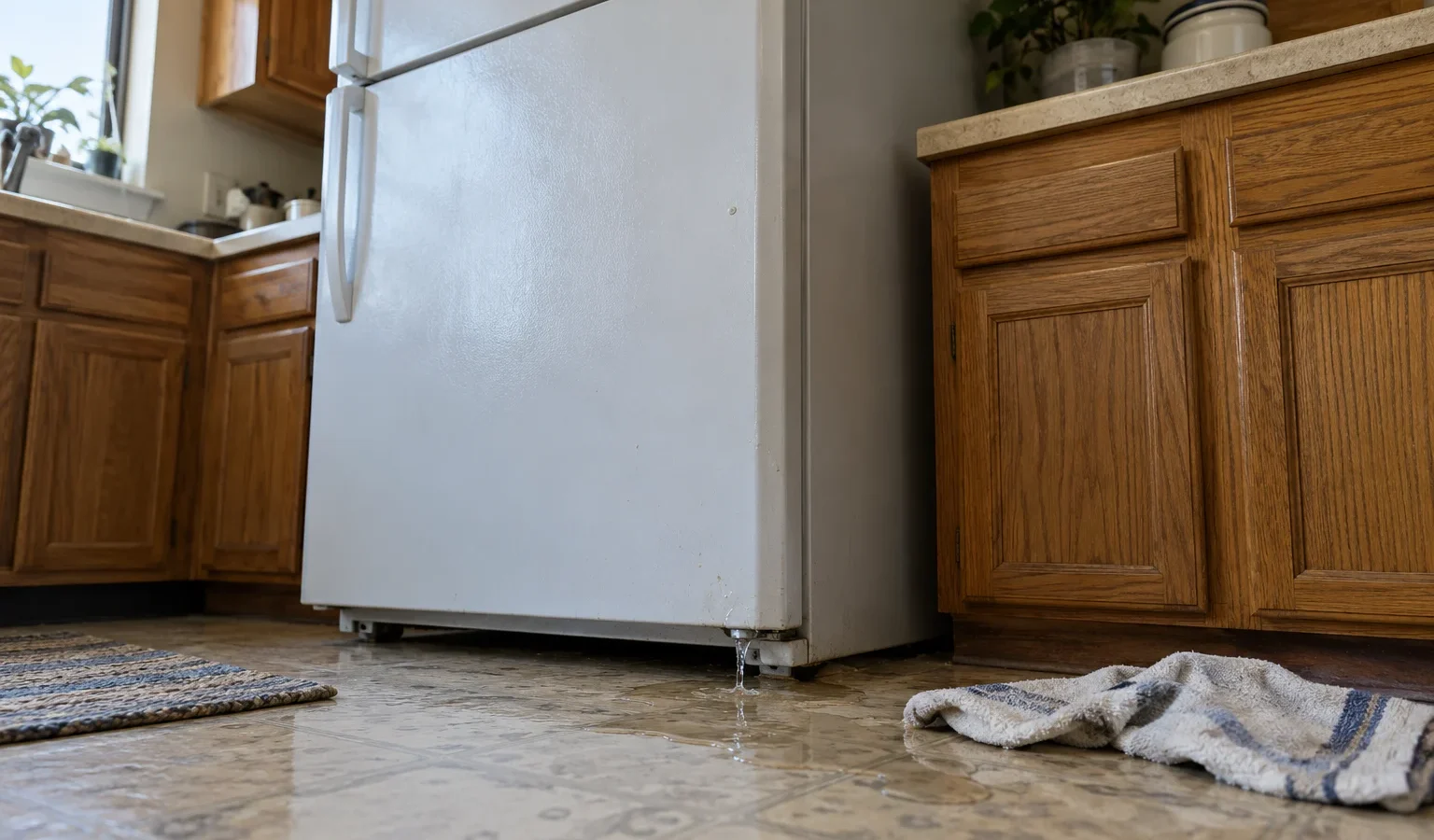
A puddle under a refrigerator can come from three completely different places, and the repair for each is different. In a ground-floor flat it is a nuisance; in a unit above neighbors it can become a bigger problem quickly, so it pays to identify the source and shut off what you can. Work through the sources below from the most common to the least.
If water is running onto the floor and you can reach the shutoff valve for the refrigerator line, close it. If the refrigerator is plugged in near the puddle, dry the area before touching the plug. When you cannot tell where the water is coming from or the outlet is wet, switch the breaker off rather than reaching for the cord. Mop the floor and put a towel under the cabinet so you can see whether new water appears.
A frost-free refrigerator melts frost off the coil several times a day. The melt water runs down a small drain tube to a pan near the compressor, where it evaporates. When the drain clogs with food bits or ice, the water backs up and spills inside the freezer or under the crisper drawers, then runs out the front. Signs: water or a sheet of ice at the bottom of the freezer, a puddle that grows slowly, and water that appears after a defrost.
Models with an ice maker or a dispenser have a thin line running to a valve at the back. A kinked line, a loose compression fitting or a small crack can drip steadily. The signs are a puddle at the back, a wet floor behind the cabinet and a leak that continues no matter what the refrigerator is doing. Check where the line meets the wall valve, and look for damp patches along its length. Pulling the cabinet out gently is fine, but keep the line from bending sharply.
The water inlet valve sits near the bottom rear and feeds the ice maker and dispenser. If it fails to shut fully, water can seep into the ice maker and overflow, or a dispenser tank can leak into the door or into the front grille area. A dispenser failure code on the display may point here; see the dispenser failure code and the flow meter error if your display shows either.
Condensation on the outside of the doors or on the shelves inside points to a leaking gasket, a door that does not close, or a very humid kitchen. This is more of a sweat than a leak, but a crumpled or torn seal lets warm air in and causes drips that look like a failure.
The pan under the cabinet evaporates the melt water. If the unit tilts forward or the pan has shifted, water can spill over the lip. This is rare but easy to rule out once you can see underneath.
Do not pour boiling water into drain openings, and do not force a probe into a drain tube that you cannot see. Do not open the rear panel to chase a leak around live parts, and do not keep using a unit with a wet electrical area. A burning smell or crackling sound means power off at the breaker.
If you rent, tell the property manager about a leak early and keep a few photos of where the water appeared. In multi-unit buildings a slow drip can travel under cabinets and flooring before it is visible, so check the cabinet beside the refrigerator and the wall behind it for damp spots. Owners of condos have the same concern for the unit below.
Water sitting under a refrigerator damages flooring, can reach neighboring cabinets and invites mold. Ice that has built up from a blocked drain also pushes against fans and sensors and can lead to poor cooling later. If the unit is still cooling but dripping, a diagnosis is better than waiting for the first sign of damage. Our Kenmore refrigerator repair visit finds the source, gives you a written estimate and waits for your approval before any repair.
Tell us where the water appears, whether the refrigerator has an ice maker or dispenser, and what is on the model label, usually inside the fresh-food wall or at the door frame. Our Kenmore refrigerators guide explains the lineup, and a bottom-freezer entry like the 46-75472 shows the format of a model page. If the leak seems tied to ice production, read the ice maker article as well.
The defrost drain is the usual cause. When it clogs, melt water has nowhere to go and collects at the bottom, often freezing into a sheet of ice.
If the leak is small and the unit still cools, you can for a short time with a towel and regular checks. Shut off the supply valve if the line is the source, and book a diagnosis.
A supply-line leak keeps going regardless of the cooling cycle and usually shows behind the cabinet or near the wall valve. Close the valve and see whether the puddle stops growing.
No. A tilted cabinet, a shifted pan or heavy humidity can also cause it. A technician checks the simple causes first.
Water near a plug or outlet is. Dry the area, keep away from wet electrical parts and use the breaker if you are unsure.
Share a few details and we’ll confirm an appointment. Prefer to talk? Call us and we’ll help right away.