

Specialized Kenmore Appliance Repair in San Francisco
Mon–Sat: 8:00 AM – 7:00 PM
Thick frost on the walls, a lid that sticks or ice around the door seal points to air getting in or a defrost fault. Learn the causes and what to try first.
Kenmore repair checklist · San Francisco Bay Area
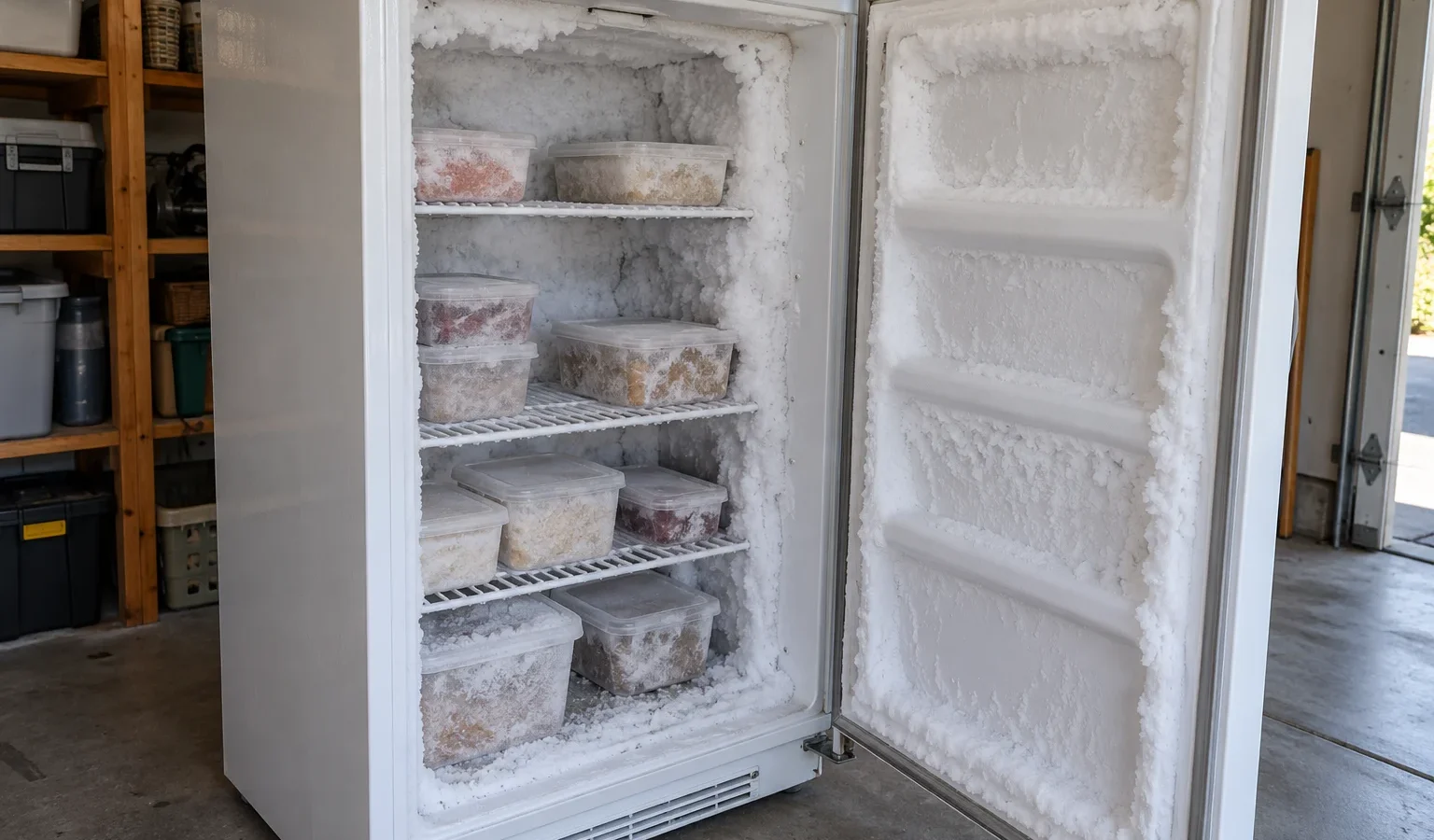
Frost is frozen moisture, and moisture only gets into a freezer one of two ways: with the air that enters through the door or lid, or from the food and containers placed inside. If the layer on the walls grows quickly, the first question is where the damp air is coming from. If frost forms on a frost-free upright’s rear wall or on the coil, the question becomes whether the machine’s own defrost system is doing its job.
A manual-defrost chest freezer is expected to collect frost over time on its inner walls. You scrape or thaw it when the layer gets thick. A frost-free upright is supposed to remove frost automatically, so a visible layer on the back wall or around the evaporator cover is a symptom, not routine. Knowing which type you own changes how you read the situation.
Warm room air leaks in and condenses on the cold surfaces. Look for frost concentrated near the gasket, a seal that is cracked, flattened or no longer springs back, and a door that does not hold a sheet of paper. Wipe the gasket clean; a sticky or dirty seal can stay slightly open.
Items sticking out, a bag caught in the seal or a door that does not latch will let moist air in every minute. An upright with a door that swings back open is a very common cause. The door-ajar message on some models is described in the freezer door code page.
Warm leftovers, uncovered liquids and poorly wrapped food release moisture that freezes onto walls and packages. Cooling food before it goes in and covering it well reduces the load.
In a frost-free upright the defrost heater melts frost off the evaporator at set intervals, guided by a sensor and a control. When the heater, the sensor or the timing fails, frost accumulates until air can no longer pass through the coil. The freezer then fails to hold temperature, a symptom described in our article on a freezer that is not freezing.
Melt water leaves through a small drain. If it blocks, water refreezes in the bottom as a sheet of ice that creeps up and traps the drawers.
Garages with damp air, rooms where the door is opened often, and freezers placed beside a dryer vent or a water heater see more frost. Humid evenings near the coast also add moisture every time the lid lifts.
After a full defrost and a cleaned seal, watch the freezer for a week or two. If frost returns slowly and only on the walls near the door, you are dealing with habits and a seal. If heavy frost returns on the rear wall within days, or the freezer starts to warm again, the defrost circuit or a sensor is suspect and a technician should look at it. The same applies if you see water pooling at the bottom after a defrost.
Heavy frost is also a sign that food is losing moisture. Packages crusted with ice crystals and meat that looks dry at the edges have been through repeated warming and refreezing. Wrapping food tightly, labeling containers and using the oldest items first keeps the freezer less crowded and reduces the amount of damp air each opening lets in.
Do not use a hair dryer or heat gun inside the liner, do not stab ice off the evaporator, and do not run the freezer with the door propped open to melt frost faster. Punctured tubing is a repair that can end a freezer’s useful life. If a burning smell appears, switch off at the breaker.
Pick a time when the freezer is nearly empty. Line the floor with towels, keep coolers ready for the food, and place a shallow pan under a drain if the unit has one. Wipe the interior dry afterwards, restart it and give it time to reach its normal cold before restocking. Write the date on the lid so you can judge how quickly the frost comes back.
Our Kenmore freezer repair visit begins with diagnosis of the seal, the airflow, the defrost circuit and the drain, then a written estimate. We do not repair anything without your approval. Have the model number to hand, usually on the inner wall or near the hinge. You can read about the lineup in Kenmore freezers or browse an example like 253.28042.
A thin layer is normal. A thick layer that builds quickly, especially in a frost-free upright, points to a seal problem, a door that is not closing, or a defrost fault.
When the layer gets thick enough to reduce storage or interfere with the lid. Unplug it, move the food to coolers and let it thaw with towels around.
Yes. Warm air leaks in, its moisture condenses and freezes on cold surfaces, usually near the gasket first.
If the cause is a failed defrost part or an air leak, it returns quickly. A technician can test the heater, sensor and drain.
No. Tubing and liners are fragile. Use plastic tools only and let the ice soften first.
Share a few details and we’ll confirm an appointment. Prefer to talk? Call us and we’ll help right away.