

Specialized Kenmore Appliance Repair in San Francisco
Mon–Sat: 8:00 AM – 7:00 PM
When a Kenmore dryer needs cycle after cycle to dry one load, airflow is the first suspect, then the heat source and the moisture sensing. Here is how to sort them out.
Kenmore repair checklist · San Francisco Bay Area
Dryers drift into this problem quietly. A load that used to finish in one cycle now needs a second, then a third. Towels are damp in the seams, jeans are warm but not dry, and the laundry room smells humid. Because the dryer still runs and still seems to heat, people keep running it until the electric bill makes them wonder. A Kenmore dryer that takes too long is almost always moving too little air, making too little heat, or misjudging how wet the clothes are.
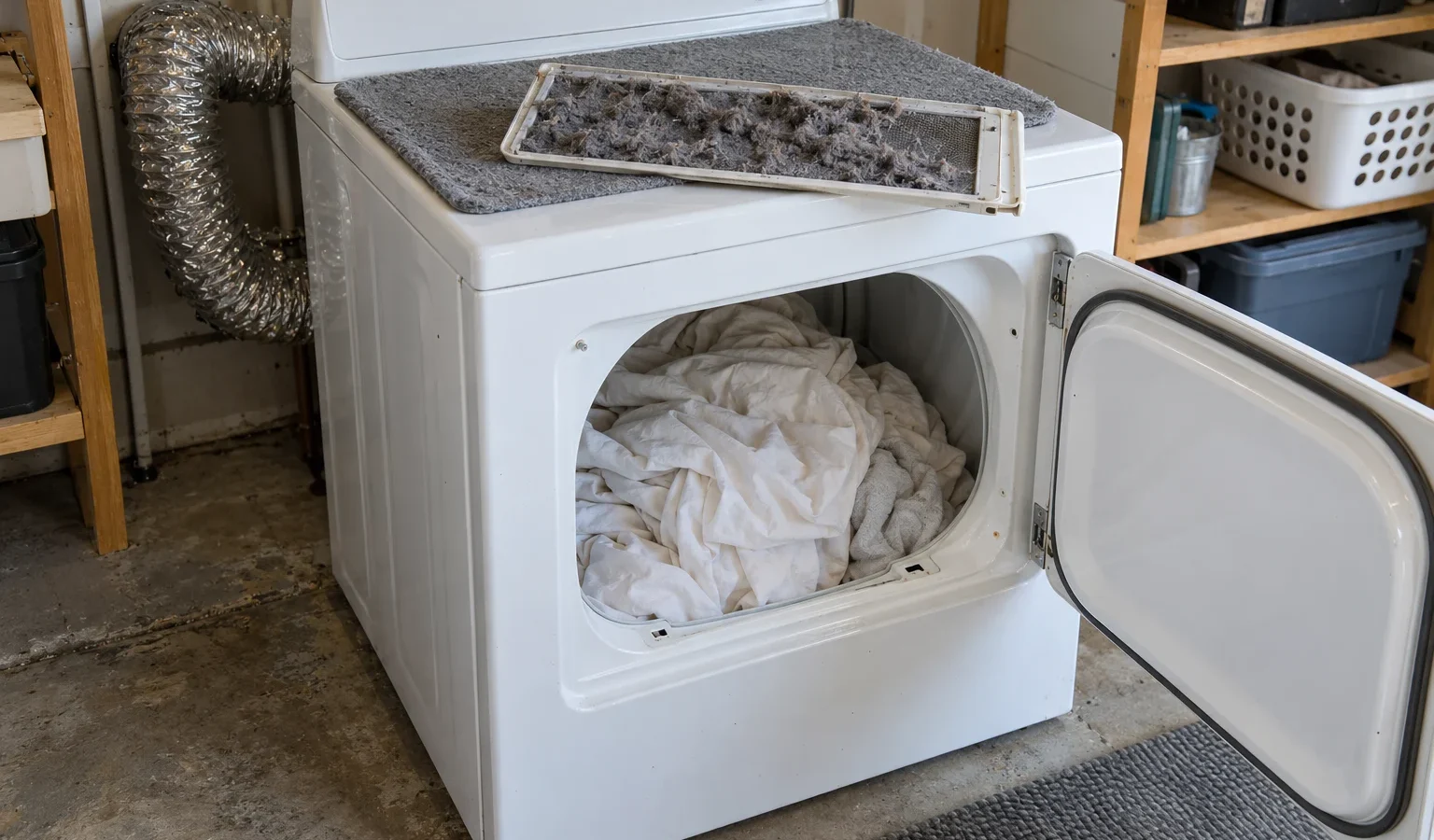
A dryer works by heating air, passing it through the tumbling clothes, and exhausting the moist air outside. If the exhaust path narrows at any point, wet air lingers in the drum and the cycle stretches. That path begins at the lint screen, goes through the blower, and continues through the duct to the outside wall. Any one of these can restrict it.
The lint screen is the obvious point, but a screen that looks clean may still be coated with a film from fabric softener sheets. Washing the screen with warm water and a soft brush, and letting it dry, restores airflow. Beyond the screen, lint packs into the housing and duct. In many Bay Area homes the dryer vent runs up through a wall or along a closet ceiling to a hood on the outside, and long or twisted runs collect lint. A flexible foil duct behind the dryer is also easy to crush when the machine is pushed back. The outside hood flap can stick closed with lint or a nesting bird.
Run the dryer for a minute and stand at the outside hood. A strong, steady push of air is what you want. Weak airflow, or none, tells you the problem is in the vent.
If airflow is good and clothes are still damp, the dryer may be making only part of the heat it should. An electric model like the 26-82272 may have a partly failed element or only half of its double breaker delivering power. A gas dryer such as the 796.91022900, which is no longer sold new, may have a burner that lights weakly or cycles off early. The symptoms overlap with those on our dryer not heating page, where those parts are discussed in more detail.
Many modern dryers end the cycle based on moisture sensing rather than time. Sensor bars inside the drum can get coated with residue, so the dryer believes clothes are dry and ends early, or it never gets a good reading and runs long. Wipe the sensor strips gently with a damp cloth if you can see them. A thermistor or control fault can also cause cycles to end at the wrong moment. If a dryer ends cycles early on damp laundry, the sensing is under suspicion; if it runs too long, airflow and heat are.
An overstuffed drum cannot tumble the load apart, and clothes remain wet in the center. A tiny load can ball up and stay damp. Loads that leave the washer very wet add to the time, and a washer with a weak spin gives the dryer extra work; if that’s the case, see washer not spinning. Mixing heavy towels with light synthetics is also a common cause of uneven drying. These are easy to rule out.
Do not reach into the dryer’s housing or blower with tools while it is connected. Do not replace a flexible foil duct with plastic or leave the dryer venting into the closet or a crawlspace; that puts moisture and lint where they do not belong. Do not keep running load after load on a dryer that is very hot to the touch. If you smell burning, turn the dryer off at the breaker.
Stacked laundry and closet dryers in San Francisco flats push the dryer close to the wall, which flattens the duct. Long vent runs through multiple floors exist in some buildings and require maintenance by the building. If you rent, ask the landlord or manager who cleans the main vent run, because the section inside the walls is out of reach for you.
If airflow at the hood is strong, the lint screen is clean, and cycles are still long, the issue is in the heating or sensing. The technician checks airflow, heating and controls in order, explains the cause, provides a written estimate and does nothing without your approval. Bring the model number from the label in the door opening. Read about the visit on our Kenmore dryer repair page, and see the Kenmore dryer guide for label locations.
Thick items need good airflow and steady heat. Restricted vents, overloading and worn heating parts are the usual reasons. Clean the lint screen, check the outside hood and try a smaller load.
Yes. Even a screen that looks clear can be coated with a film that blocks air. Washing it with warm water and a soft brush, then drying it, often helps.
The duct you can see behind the dryer is usually yours to check, but the run inside walls and the outside hood often belong to the building. Report weak exhaust to the landlord or manager.
Heat trapped in the drum with no exit means the moist air is not leaving. That points to a restricted vent or blower path rather than a heating fault.
When airflow at the outside hood is strong and the lint screen is clean but cycles remain long. A technician can test heat output, sensing and the blower path.
Share a few details and we’ll confirm an appointment. Prefer to talk? Call us and we’ll help right away.