

Specialized Kenmore Appliance Repair in San Francisco
Mon–Sat: 8:00 AM – 7:00 PM
A squeak, squeal or rumble from a Kenmore dryer is a message from a belt, roller, pulley, motor or blower wheel. The type of sound tells you which one.
Kenmore repair checklist · San Francisco Bay Area
A noisy dryer rarely fixes itself. The squeak that began as an occasional chirp becomes a constant shriek, and one day the drum stops. The good news is that dryer sounds are quite descriptive. A Kenmore dryer has a short list of moving parts, and each tends to make a signature noise as it wears. If you can describe the sound, you can usually guess which part is asking for attention.
Run the dryer empty for a moment and listen. Is it a high squeal that stays constant while the drum turns? A squeak that repeats once per drum rotation? A low rumble or growl? A thump that comes with every turn? A scraping like metal on metal? A rattle that appears with certain loads? Each of these is a different story, and the next sections walk through them.
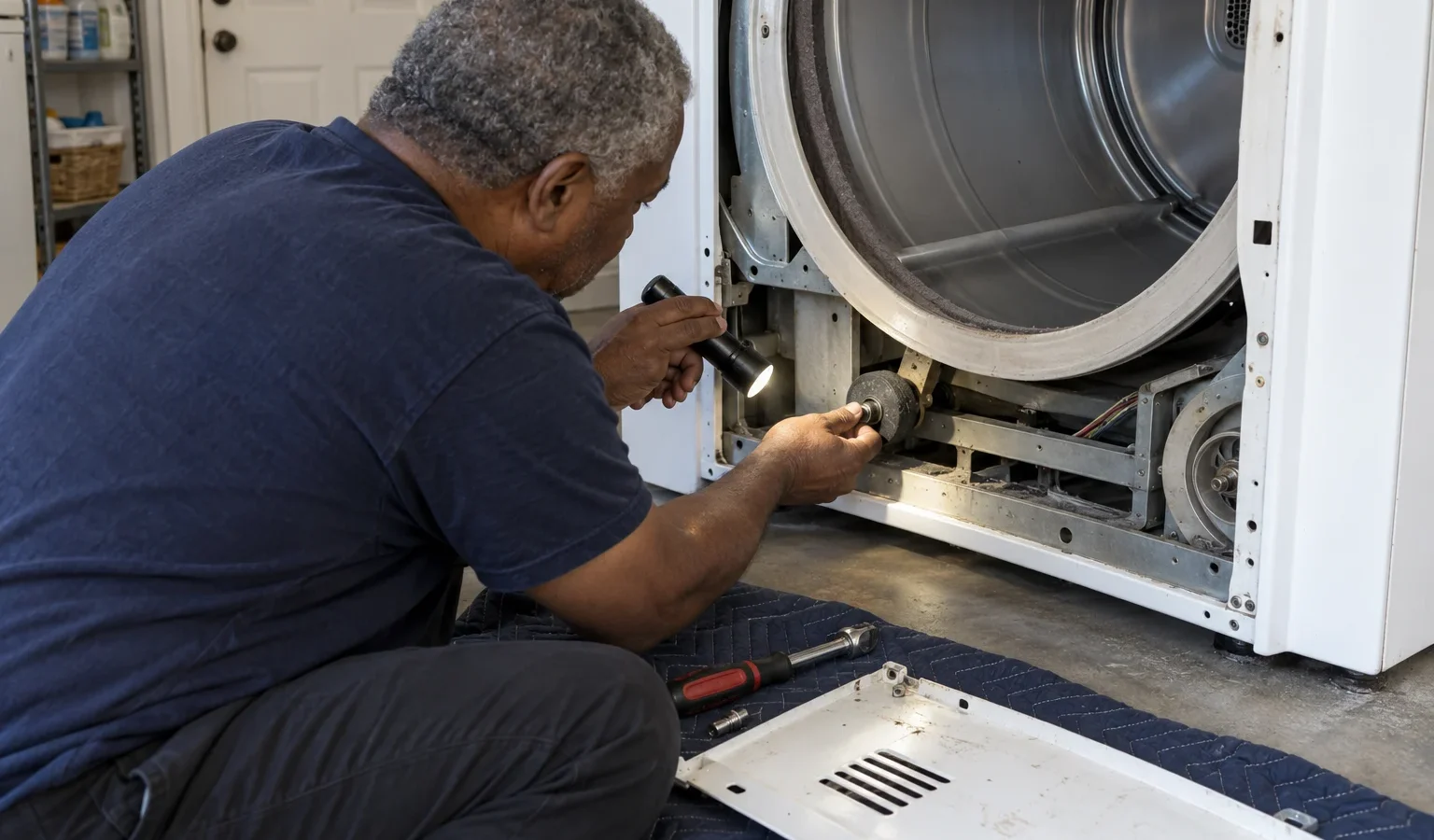
A squeal that never stops while the dryer runs usually comes from a rotating part that has lost its lubrication: the idler pulley that holds belt tension, the motor bearings, or the pulley on the motor shaft. It often begins on startup and fades as parts warm, then returns. It can sound alarming, but the underlying wear tends to continue. In many cases the idler pulley wheel or the motor bearing is the source, and a technician can tell which with the cabinet open.
A rhythmic chirp matched to the drum’s rotation often points to the drum rollers, glides at the front, or the belt itself. Rollers wear into flat spots and squeak or thump as the drum rides over them. A glide that has worn through allows metal-on-metal contact. If you can feel the thump in the cabinet, the rollers are a strong suspect. This is a typical age problem for older units, such as the 796.90512900 or other discontinued dryers still in service in family homes.
A deep rumble that rises with the speed of the machine usually points at the blower wheel or the motor. The blower wheel can collect lint, which throws it off balance, or a bearing can wear. If the dryer is also taking too long or running hot, check the airflow, because heavy lint in the housing is a common cause of both. The dryer takes too long article walks through the vent checks.
A scrape or tinny clatter often indicates something loose in or near the drum: a coin, a button, a zipper, an underwire, or a pocket item caught in the seal between the drum and the front panel. These can scratch the drum and tear the felt seal. Stop the dryer and check the drum edge and the lint trap opening. If nothing is there and the scraping persists, the drum may be rubbing on a worn support, a more serious issue.
A single thump on each rotation can come from a flat spot on a roller, a bunched belt or an uneven load. A heavy item such as a rug or a sneaker can thump regardless of the dryer’s condition. A rattle that stops with an empty drum is usually the load. A rattle that continues points to a loose panel, a screw, or an unbalanced fan blade.
If the dryer began squeaking after being moved or cleaned, check that it is level and that the cabinet is not touching the wall or neighboring machine. A stacked dryer above a washer can pick up the washer’s vibration. Compact units like the 26-81202 often sit in closets where the cabinet touches the door frame. Shifting the dryer a short way from the wall is an easy test, and the noise may stop.
A squealing dryer is usually a worn part on its way to failure. Drive parts that run dry generate heat, a worn belt may snap and leave the drum motionless, and bearing failures tend to stress the motor. Catching the problem when it is only noise saves you from a stopped dryer in the middle of a laundry day and, in the worst case, an overheated drive. If the dryer starts to smell like hot rubber or metal, treat it as urgent and switch off at the breaker.
Do not spray lubricant into the drum, vents or motor; it collects lint and can create a hazard. Do not open the cabinet and oil the bearings yourself. Do not ignore a squeal that is getting louder, and do not keep running a dryer that smells of burning. If the noise is accompanied by a drum that sticks, stop using the dryer.
Dryers in older San Francisco flats may sit on slightly sloped floors or squeezed between a wall and a washer, which makes a resonant noise from the cabinet. A tight vent connection that vibrates against the wall can sound like a squeak as well. Pull the dryer forward and check that the duct is not rubbing the cabinet or the wall.
If the noise survives the owner checks, comes back after a few cycles, or is paired with burning smells, a stiff drum or a loss of tumbling, book a visit. The technician identifies the noisy part, explains what is worn, gives a written estimate and repairs only what you approve. Write down the model number from the label in the door opening. Our Kenmore dryer repair page explains the visit, and the Kenmore dryers guide shows where to find the label. If the drum has already stopped, see dryer not tumbling.
A constant squeal usually comes from a dry idler pulley or a worn motor bearing. A squeak that repeats once per turn points more to drum rollers or glides.
Short term it may run, but the noise usually means a part is wearing out. Continued use can break a belt or stress the motor, so book a diagnosis soon.
Spraying lubricant is not advised, since it attracts lint and may reach hot parts. The right fix is to replace or service the worn part.
Parts can stick when cold and quiet down as they warm. That pattern often means a bearing or pulley is starting to fail and will get worse.
Yes. A loose duct, a flapper that chatters in the wind or a vent touching the wall can create noise. Check the duct and the outside hood along with the dryer itself.
Share a few details and we’ll confirm an appointment. Prefer to talk? Call us and we’ll help right away.