

Specialized Kenmore Appliance Repair in San Francisco
Mon–Sat: 8:00 AM – 7:00 PM
If a Kenmore dryer hums, heats or lights up but the drum sits still, the drive path is broken: belt, motor, pulley, rollers or a safety signal. Here is how to narrow it down.
Kenmore repair checklist · San Francisco Bay Area
You open the dryer mid-cycle and the clothes are in a heap, warm or cold, while the machine hums or the timer ticks. Or you press Start and hear the motor but see no tumbling. A Kenmore dryer that does not tumble has lost the link between its motor and its drum, or has been told not to start. Because the drum is driven by a simple chain of parts, a few clues usually tell you where the break is.
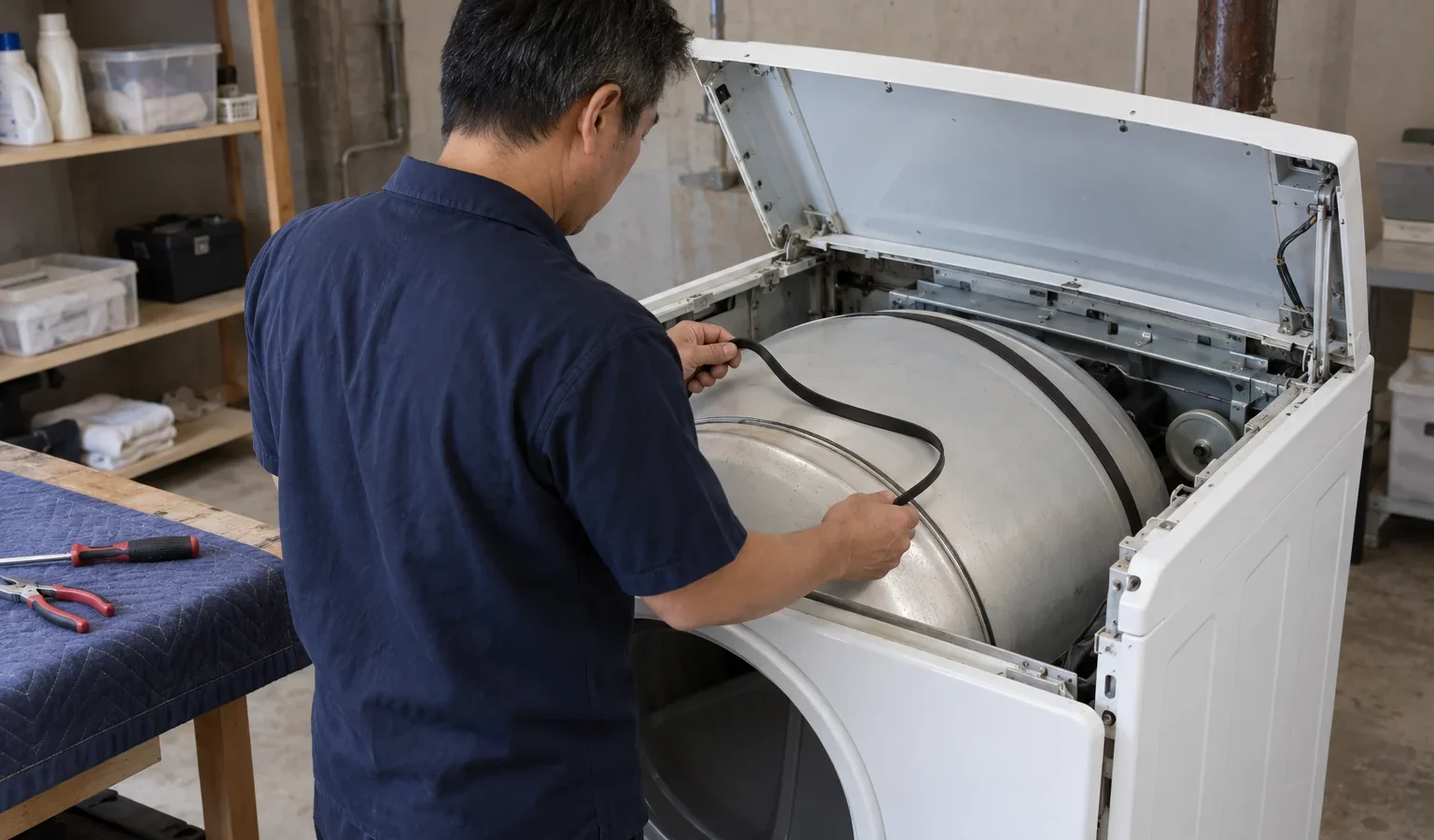
In most dryers a motor turns a pulley, a long belt wraps around the drum, and an idler pulley keeps tension on that belt. The drum rests on rollers or glides at the back and front so it spins freely. The same motor usually drives the blower wheel that moves air. That shared motor is a useful clue: if the airflow stops with the drum, the motor is the suspect; if you still hear and feel air moving, the drum drive is.
With the dryer running, put your ear near the front. A motor hum with no drum movement and no thump suggests a belt that has broken or slipped off, because the motor is turning freely. A rhythmic thump while the drum turns weakly can mean a worn belt or a stuck roller. A burning-rubber smell means the belt or a seized part is slipping. Complete silence suggests the motor is not receiving power or is not being told to run.
Switch the dryer off at the plug or breaker, open the door, and turn the drum by hand. A drum that spins freely with no resistance and a loose, floppy feel has lost its belt. A drum that is stiff, grinds or catches suggests a seized roller, a jammed object between the drum and the cabinet, or a failing idler. A drum that is hard to turn even with the belt off can mean the motor or blower wheel is binding. Never do this test with power on.
If the drum doesn’t move and the motor stays silent, the issue might not be the drive at all. The dryer will not start unless it sees the door closed, and it may refuse if a start button or knob sticks. Close the door firmly and note whether the light goes out; a light that stays on with the door shut suggests the switch is not registering. A worn door switch, a push-to-start button that no longer makes contact, and a stuck timer or control can all produce a motionless drum. The dryer squeaking noise article describes the sounds that usually come before a drive part fails.
Front-load dryers like the 26-82273 and the 26-82272 keep the belt and drum supports behind the front or top panel, and the access needs a technician. Compact units like the 26-81202 have the same chain in a smaller cabinet, with less room to work. Gas models such as the 796.90518900, which is no longer sold new, add a burner assembly beside the drive. In each case the drive logic is similar; the access is what differs.
Do not remove the top or back to inspect the belt unless you are comfortable around live circuits; most owners should leave that to a technician. Do not run a dryer with the drum jammed, because the motor will strain and overheat. Do not force a stuck drum by hand with power connected. If you notice a burning smell, switch off at the breaker and stop using the dryer until it is checked.
Dryers in closets and stacked setups are often pushed close to the wall, and the machine may rest on uneven flooring, adding load to the drum supports. A dryer that was moved recently and then stopped turning may have had its belt shifted. If the dryer is stacked over a washer, tell the technician, because stack kits and tight spacing affect access and the order of work.
A dryer with a loose belt will run its motor and blower, so the machine seems to be drying, but the clothes stay still and nothing dries. Allowing it to continue overheats the load and the area near the drum. In older buildings with dryers venting through long ducts, extra heat on top of poor airflow compounds the risk. If the drum stops turning, stop the cycle.
If the door signal is fine and the drum is either floppy or stiff, book a diagnosis. The technician finds where the break is, explains what failed, gives you a written estimate and waits for your approval. Have the full model number ready from the door opening label. See the details on our Kenmore dryer repair page, and the Kenmore dryers guide for label help.
The motor is probably running, but the belt that links it to the drum has broken or slipped. A hand test with the power off, where the drum spins loosely, supports that.
Yes. If the dryer does not see the door as closed, the motor may never start. A light that stays on with the door shut is a hint.
Only with the dryer unplugged or the breaker off. Never test it with power on, and keep hands clear of the gap at the drum seam.
That pattern fits a belt or idler wearing out, a seized roller, or an overloaded drum. Try a smaller load, and if the problem persists, book a diagnosis.
Not necessarily. Belts are wear parts, and a dryer that has run for years may only need one. The written estimate after diagnosis helps you decide.
Share a few details and we’ll confirm an appointment. Prefer to talk? Call us and we’ll help right away.