

Specialized Kenmore Appliance Repair in San Francisco
Mon–Sat: 8:00 AM – 7:00 PM
A Kenmore oven that stays cold or heats weakly points to power, a heating element, an igniter or a sensor. Here is how to tell which, and what to leave to a technician.
Kenmore repair checklist · San Francisco Bay Area
An oven that powers on but never warms up is one of the most frequent calls we get for Kenmore ranges across San Francisco. The display glows, the fan may hum, and the cavity stays lukewarm. That mix of signs matters, because it tells us the control has power and the fault sits somewhere between the control and the heat source.
Every oven has three jobs to do before it heats: receive power or gas, decide it should heat, and then actually produce heat. A failure in any one of those looks the same from the kitchen. The useful question is which one broke, and a few observations narrow it down without a single tool.
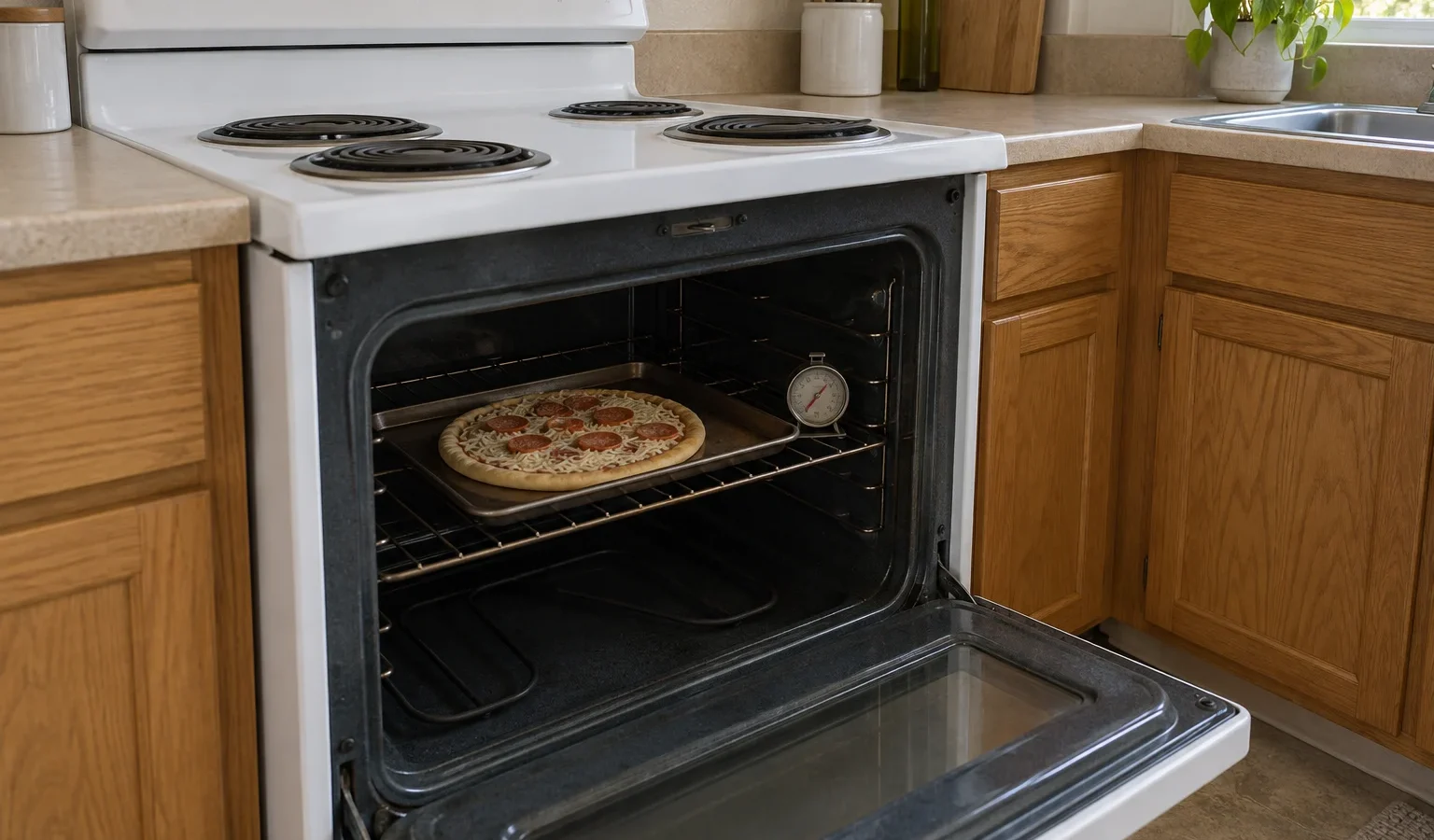
An electric range heats the cavity with a bake element on the floor and a broil element near the top. These elements fail by burning through, and a failed one often shows a visible blister, a break or a dark spot when you look through the open door with the oven cold and off. Behind the element sits a relay on the control board that sends power to it, and relays wear out after years of switching. A bad relay leaves a perfect-looking element that simply never gets power.
Electric ranges also draw from two legs of household power. When one leg is lost, the display and lights can still come on while the elements stay cold, which is why a half-tripped double breaker fools people. It is worth looking at the panel before assuming a part is bad.
A gas oven needs an igniter that glows, then a gas valve that opens once the igniter draws enough current. An aging igniter can still glow orange while being too weak to open the valve, so the oven clicks, glows, and never lights. If you can smell raw gas at any point, stop reading and follow the safety steps further down.
San Francisco kitchens often have older gas lines and tight alcoves, so the range may sit close to a wall. That makes it harder to see what is happening inside the broiler drawer or behind the lower panel, and it is a good reason to leave anything past the door-side checks to a technician.
The oven probe, a thin rod in the upper back of the cavity, tells the control what the oven temperature is. If it drifts or goes open, the control may cut heat early or refuse to start. A few Kenmore ranges report this as an error code, such as the one explained on our Kenmore range F3/E0 error code page, while others simply heat poorly with no message. Codes differ by model, so match what you see against the label on your own unit.
Do not remove the lower panel, pull the back cover or poke at the igniter. Do not bridge any switch, and do not run the self-clean cycle hoping it will reset the oven; that cycle pushes the lock and control harder when something is already off. If the broiler drawer smells of gas or you see sparks, shut the unit off at the breaker and step away.
If the breaker is fine, the cooktop works and the oven stays cold after one reset, a diagnosis is the next move. We check the element or igniter, the relay, the probe and the wiring in that order, and you get a written estimate before any part is ordered. Nothing is repaired until you approve it. You can start with Kenmore range repair, read about the Kenmore ranges we see, or compare with our guide to a Kenmore oven that runs at the wrong temperature.
Elements, igniters and probes are specific to the range, so the full number on the label decides whether the right part is in the van. It is usually on the oven frame or inside a drawer. Pages for units like the Kenmore 22-95163 repair page, an electric range, or the Kenmore 22-76082 repair page, a gas range, show how we group common complaints by model.
The control and lights run on a small power path that is separate from the heating circuit. A burned element, a weak igniter, a failed relay or a lost leg of power can all leave the display working while the cavity stays cold.
On most ranges the cooktop is a separate circuit, so it can keep working. If you smell gas, see sparks or notice burning from any part of the unit, shut off power at the breaker and stop using it until it is inspected.
No. Self-clean asks the oven to run harder and locks the door, so it tends to expose a weak part rather than cure it. It can also trip the control into a fault.
Sometimes a single reset clears a frozen control. If the oven is still cold afterward, the cause is a failed part, and repeated resets only add wear.
Say whether the display works, whether the cooktop lights, if the oven is gas or electric, whether you see a code, and the full model number from the label.
Share a few details and we’ll confirm an appointment. Prefer to talk? Call us and we’ll help right away.